A loom on which cloth is woven from multicolored threads. The roman numeral V emerges as separate threads come together to form a patterned fabric.

Nature Aging turns five

Editorial

Announcements

  • Robots (representing immune cells) on a production line

    Our August 2025 issue provided a Focus on immune aging, featuring a series of reviews and opinion pieces, and a panel discussion webcast, covering recent advances in immune aging research.

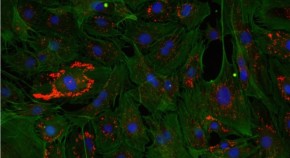
  • Fluorescent microscopy image of senescent cells

    This joint Collection across npj Aging, Nature Aging, Nature Metabolism, Nature Cell Biology and Scientific Reports welcomes submissions on cellular senescence, aiming to deepen our understanding of cellular senescence as both a driver and potential therapeutic target of aging.

    Open for submissions
  • Three trees against a sky. The three trees have green, yellow and then red leaves from left to right.

    Our December 2024 issue provided a Focus on reproductive aging, featuring a series of reviews and opinion pieces on recent advances in reproductive aging research.

Advertisement

  • LINE-1 retrotransposons are implicated in aging, but their role in cardiac aging specifically is not well understood. Here the authors show that LINE-1 expression rises in mouse hearts with age. Genetic LINE-1 derepression is accompanied by cGAS–STING activation and cardiac dysfunction, while pharmacological inhibition of LINE-1 or STING improves cardiac function in aged mice.

    • Chaofan Yang
    • Heng Du
    • Moshi Song
    Article
  • Kumazawa, Xu, Wang and colleagues identify nuclear egress as the mechanism by which cytoplasmic chromatin fragments relocate from the nucleus to the cytoplasm in senescence. They link inflammation to metabolism by showing this egress is regulated by AMPK and metformin.

    • Takuya Kumazawa
    • Yanxin Xu
    • Zhixun Dou
    Letter
  • Chen et al. identify a brain-to-bone communication axis whereby extracellular vesicles from aged brain neurons transport WDFY1 protein to distal bone, driving bone-fat imbalance and promoting osteoporosis.

    • Chun-Yuan Chen
    • Zun Wang
    • Hui Xie
    Article
  • As we embark on our sixth year of publication, we reflect on what the journal has achieved and highlight some of its successes. This anniversary issue also features two Q&As. One pulls back the curtain on the work of the journal’s backstage team. The other samples the thoughts and opinions of some of the many researchers who supported the journal early on, as authors, advisers or reviewers.

    Editorial
  • For Nature Aging’s fifth anniversary, we acknowledge the essential work that is done by our colleagues, without which Nature Aging’s monthly publication would not be possible. We speak with some of our internal colleagues about the process of making a journal every month. Rebecca Roberts is a production editor at Springer Nature, Mark McGranaghan is a senior sub editor, Lauren Snape is an art editor and Amanda Karmolinski is a senior editorial assistant. In this Q&A, Rebecca, Mark, Lauren and Amanda pull back the curtain and tell us about the various roles that go into putting it all together.

    • Rebecca Roberts
    • Mark McGranaghan
    • Anna Kriebs
    Q&A
  • As Nature Aging celebrates its fifth anniversary, the journal asks some of the researchers who contributed to the journal early on to reflect on the past and the future of aging and age-related disease research, the impact of the field on human health now and in the future, and what challenges need to be addressed to ensure sustained progress.

    • Fabrisia Ambrosio
    • Maxim N. Artyomov
    • Sebastien Thuault
    Q&A
  • China’s rapid recent growth has depended on a rural-to-urban migrant workforce that supports its factories, infrastructure and services. As the first generation of these migrants reaches retirement age, life-cycle challenges rooted in institutional exclusion — in particular, through economic disparities in pension support — are becoming apparent and urgently require reform.

    • Huaxiong Jiang
    Comment
A group of 3D cancer cells emerging

Cancer and aging

This cross-journal Collection invites original research that explicitly explores the role of aging in cancer and vice versa, from the bench to the bedside.
Collection

Advertisement

Nature Careers

Science jobs

Advertisement