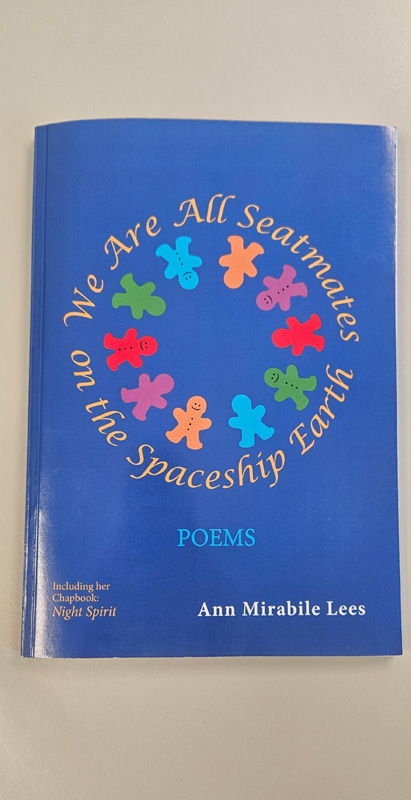
Growing up in inner-city Revere, Martha’s Vineyard was never a real place to me. It existed as an idea, distant, exclusive, and untouched. A place associated with celebrity, wealth, and leisure, far removed from the streets where I was raised and the instability that shaped my early life. It was somewhere other people went, somewhere people like me were meant to admire from afar.
I went for a visit when a friend asked because on that day, I needed somewhere else to be. I hoped they would let us in.
When I stepped off the ferry in Vineyard Haven, I felt immediately out of place. Not because anyone said anything, but because I became acutely aware of myself. My clothes, my posture, and the assumptions I carried about who belonged there and who did not made me feel exposed. I bought a baseball hat at the Black Dog, a small and probably futile attempt to disappear, and sat near the water watching the ferries come and go. I knew I was an outsider trying to believe I could stay. I didn’t then, not yet.
But I wanted to. The island felt contained and calm in a way my life never had, and I never wanted to leave.
A few years later, life back home became unbearable. Back in Revere, the streets I knew by heart were changing in ways I could feel but not yet name. I had grown up surrounded by addiction, dysfunction, and the quiet endurance that comes with both. My father, sober for seven years, started drinking again. He was found dead above the bar he had returned to. Around the same time, OxyContin use surged and was declared an epidemic. As prescriptions tightened and the drug became harder to obtain, people in neighborhoods like mine turned to heroin, which flooded back in its place.
The neighborhood unraveled. People I grew up with were too young to die, but some did. Others ended up in jail. Addiction tore through everything in neighborhoods where help had always arrived late, if it arrived at all.
I am not sure what saved me. School, maybe, or fear. I had seen addiction up close and lived inside it. My mother insisted on therapy, often saying we were lucky growing up because our addict was so bad we could not hide him, and that it forced us to face the truth. I did not understand that then. I do now.
What I knew was that I needed out.
I thought of the Island again. It felt like a solution, a beautiful, contained place where I believed at the time that chaos could not follow, and where beauty itself seemed like protection.
They needed a nurse, which I was now, following in my mother’s footsteps. Blue collar, practical, expected. It meant stability, a paycheck, and food on the table. I needed an escape just as badly.
I traded boots for sandals and convinced myself I had left my past behind when the ferry doors closed. Life felt lighter. Friendships formed, and beach days followed. For the first time, I breathed without bracing for impact.
I became a private nurse for a famous Island author and found myself writing again, something I had done as a child. I used to write to paint new worlds far from my own. Now my mind felt free. I wrote about Island things, the light, the water, and the quiet. Writing stopped being an escape and became a way to stay.
Then came him.
He was from the city too, a different one but just as hard and familiar, charismatic in a way I recognized. We built a life quickly, caught up in the ease of Island living, and I believed I was home.
Until I wasn’t.
A needle appeared in my bathroom, a spoon beside it. I told myself it could not be real, not here, not on this island. I had bet everything on the idea that beauty protected us.
I was pregnant when it collapsed. Addiction had followed me, stretching easily across seven miles of water.
One night, I drove to East Chop in the off-season and sat in my car above the cliffs, my hand on my stomach, thinking about how easily everything could end and how much I wanted it to.
It did not end there.
I left when I could no longer deny what I was seeing. Familiar landmarks became meeting points for drug exchanges. Someone I trusted turned out to be his dealer. Once I stopped pretending, the Island no longer looked the same.
I got help. I went to therapy and Al-Anon and read everything I could, trying to understand addiction well enough to keep my child from growing up inside it. Most of all, I left him. I left the addict I loved, because I finally understood that love and beauty do not conquer everything and that you can love deeply and still choose to save yourself. That clarity came, in part, from caring for my Island author patient, whose work had inspired me to return to writing and whose character later pushed me to make a difficult choice of my own. Through him, I understood that choosing survival is not betrayal. It is courage.
Years later, I came back.
I stepped off the ferry with an unfinished manuscript and walked to the small beach behind the Black Dog. I sat near the water again. The water was still there. The light and the quiet remained.
The Island had not cured me. It was never meant to.
What had changed was me. I could finally see beauty without denying suffering. People hurt everywhere, even in beautiful places.
And still, the Island remains.
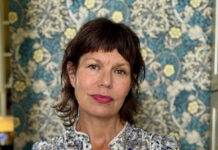
Dianne C. Braley is an awardwinning author and nurse whose work often draws on her time on Martha’s Vineyard and her upbringing in Massachusetts.