Managed Databases.
Self-Hosted Costs. Your Cloud.

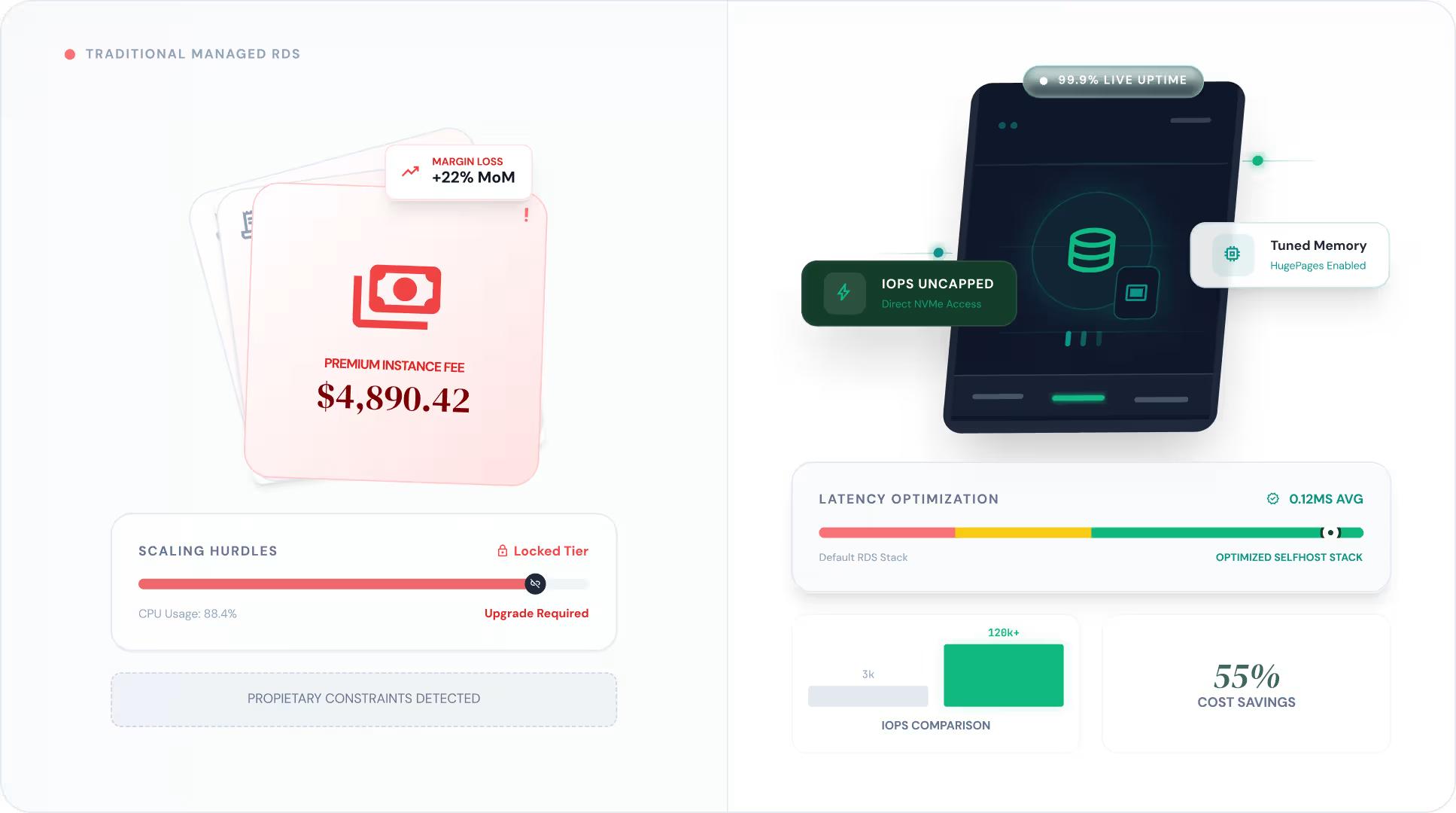
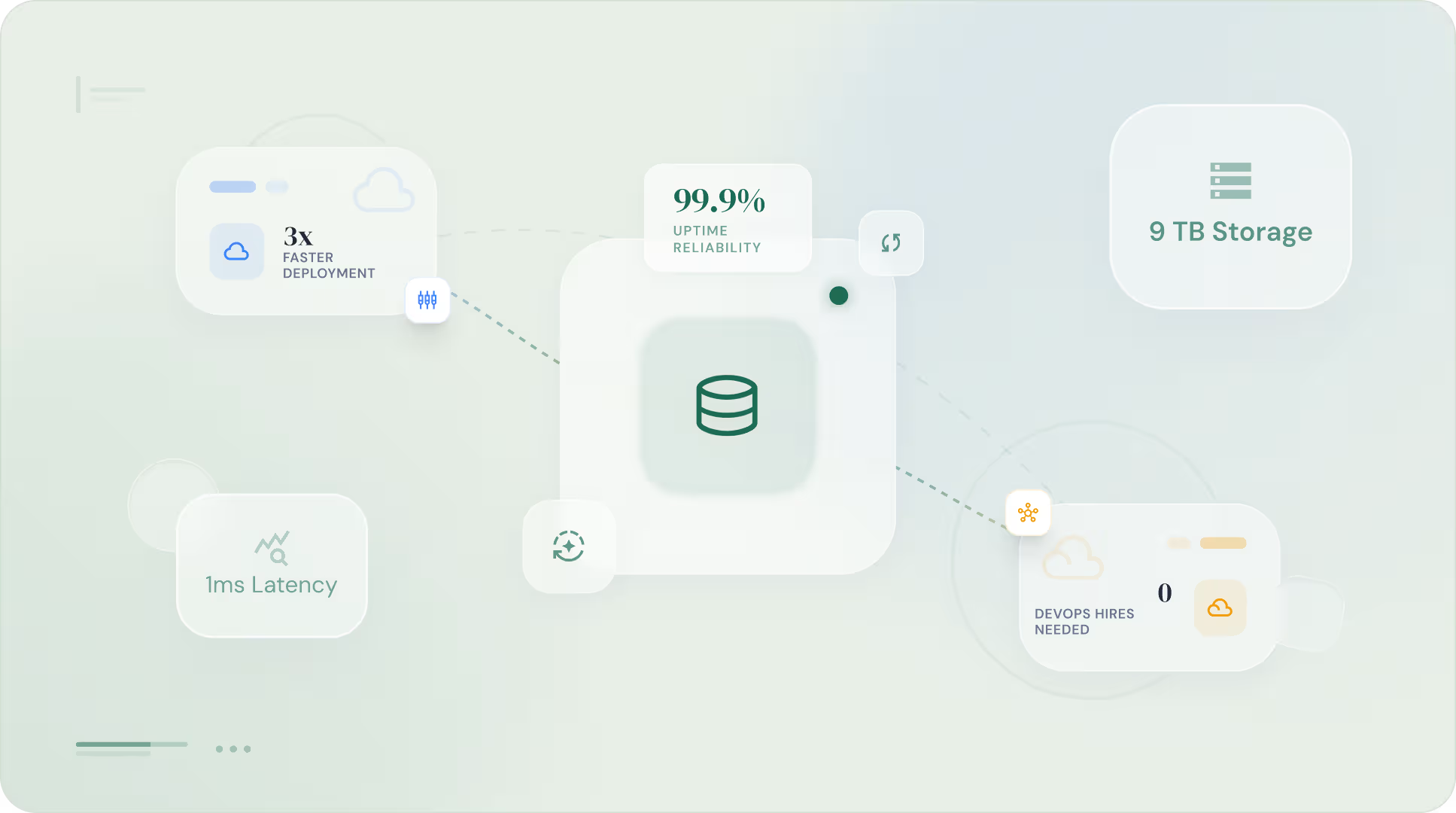
Run a cost-efficient managed database in your own cloud starting under $4/month, with complete infrastructure control and up to 60% lower costs compared to traditional services

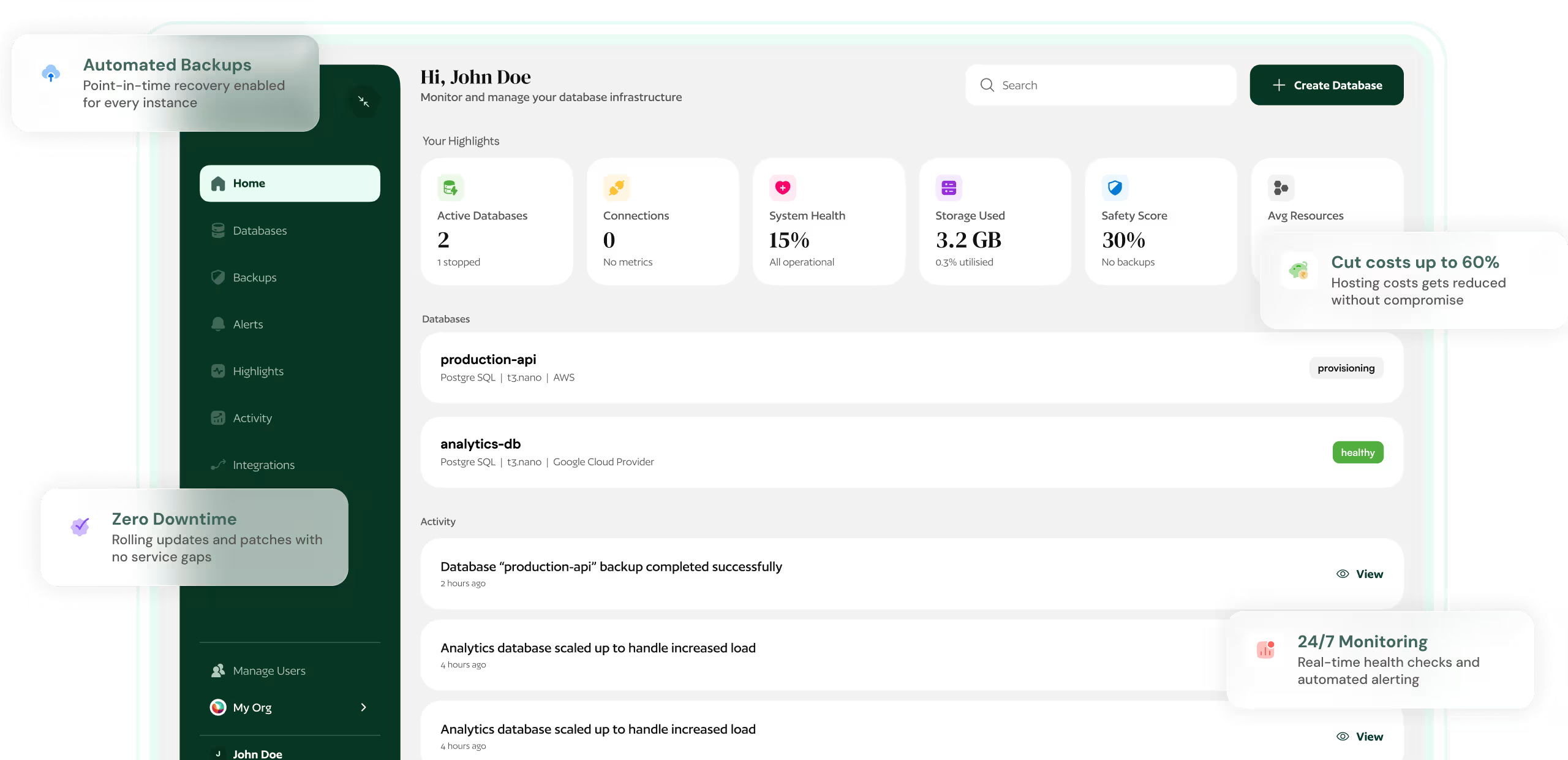
Dashboard interface of the SelfHost self-hosted database service showing project management and database deployment controls.

The Simpler Way to Run a Cost-Efficient Managed Database. Self-hosting gives teams full infrastructure control but often comes with significant operational overhead. Traditional managed services reduce that burden but introduce higher costs and vendor lock-in. SelfHost.dev offers a third option: a managed database in your own cloud, combining automation with infrastructure ownership. It delivers database cost optimisation without sacrificing visibility, control, or flexibility.

features

Powerful Database Operations.
Zero Operational Stress

Everything you need to run production-grade databases across clouds, from provisioning to performance monitoring, in one unified platform.

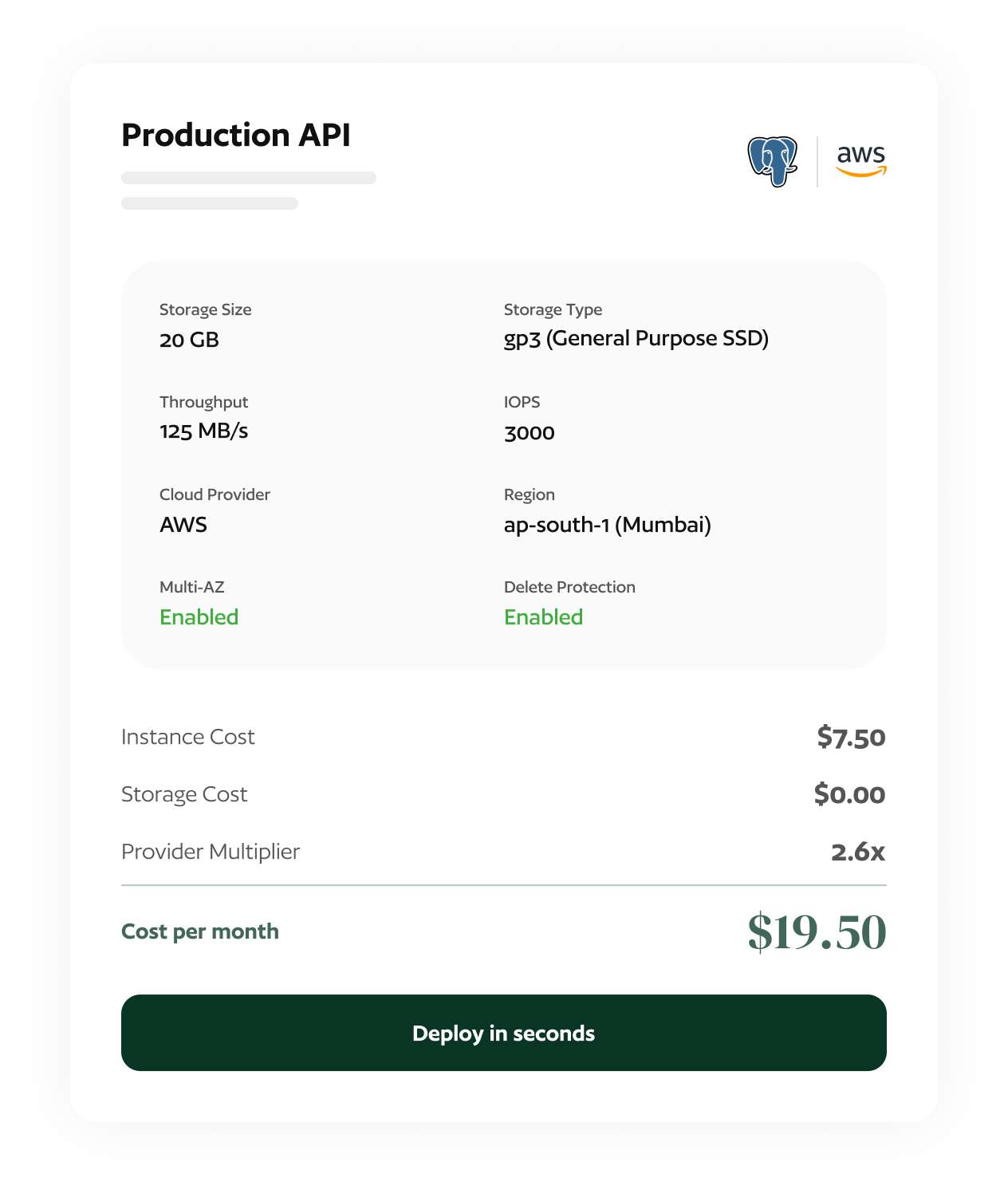
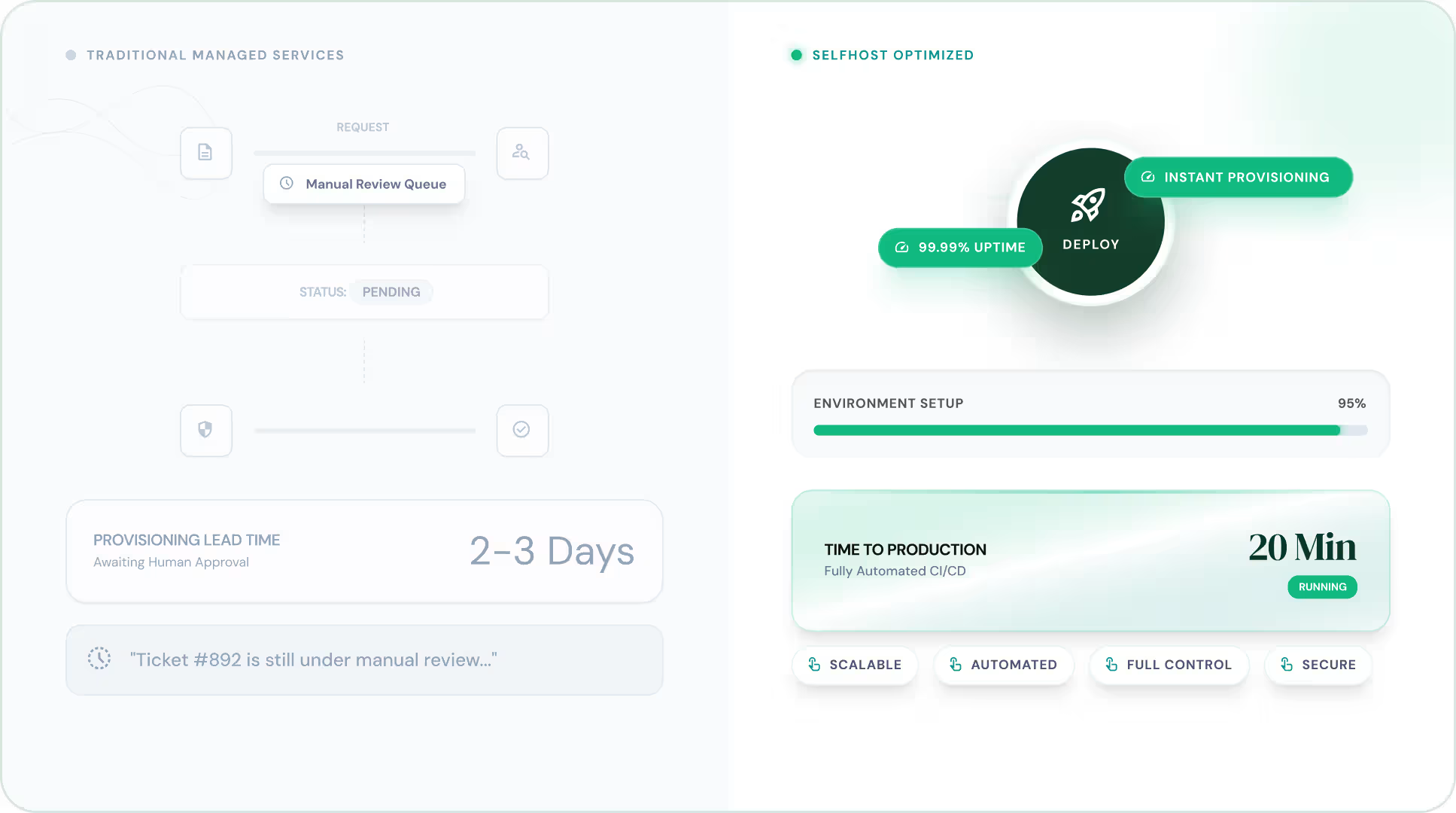
From zero to production in 3 minutes

No Terraform, no YAML, no 47-step runbook. Just a form and a deploy button to spin up a production-grade cloud database in under 3 minutes.

Failover that actually works

Multi-AZ with automatic replica promotion. When things go wrong (they will), traffic shifts in seconds, not hours, ensuring reliable multi-cloud database deployment.

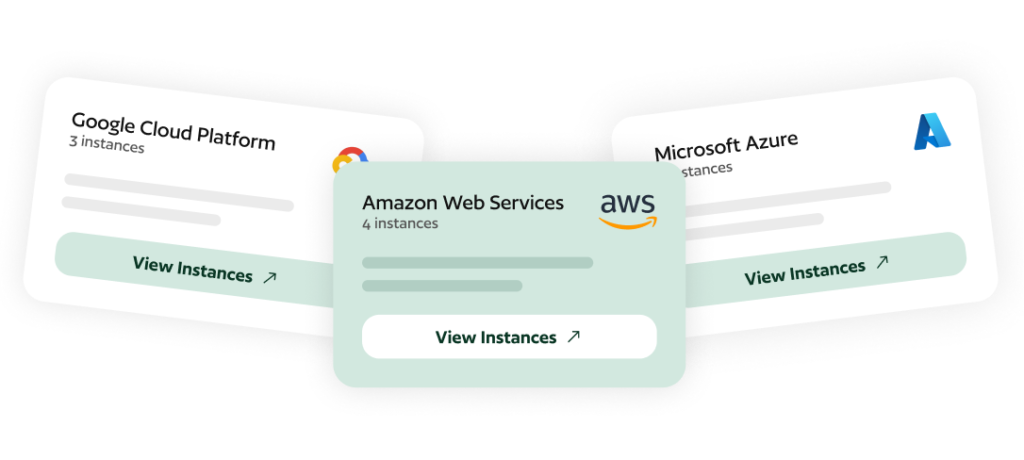
One dashboard. All your clouds.

Manage databases across AWS, GCP, or Azure from a single interface. No switching between consoles : just unified multi-cloud database management.

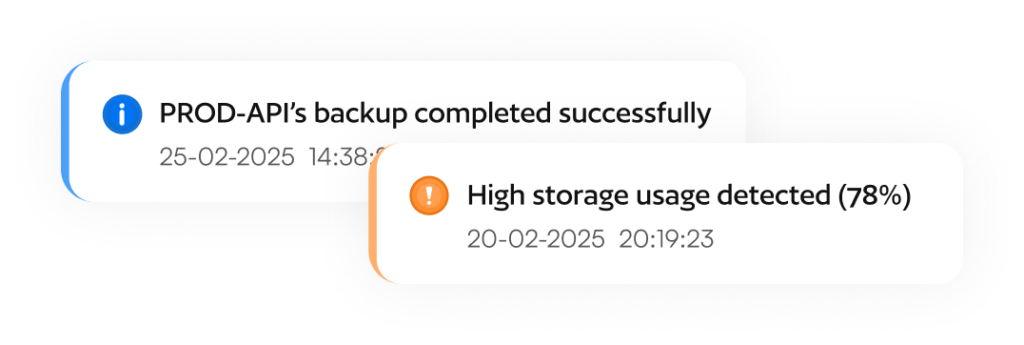
SelfHost notification cards showing successful backup completion and high storage usage warning alert with timestamps

Secure, maintained, and monitored

Patches applied, configurations hardened, alerts configured. You focus on features; we handle operational reliability and compliance.

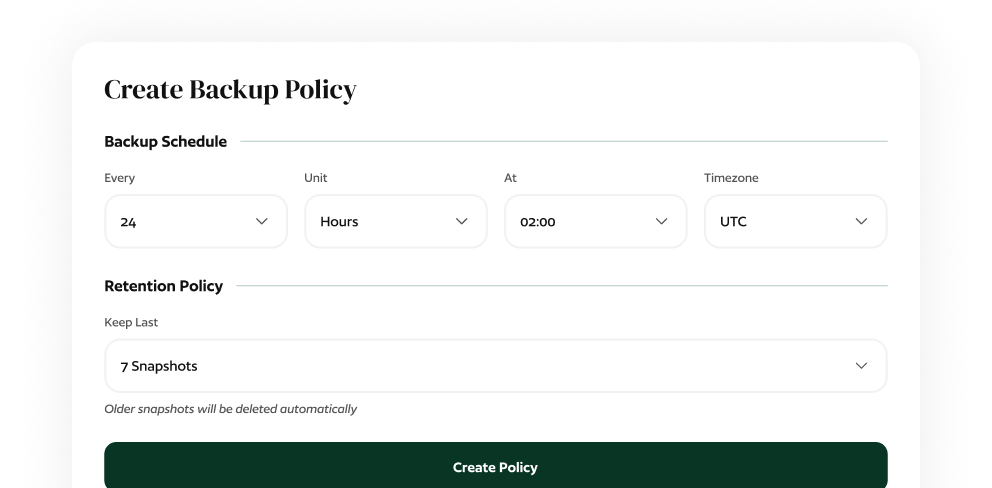
Backups you don't have to think about

Continuous snapshots, point-in-time recovery, and verified restores; automated as part of your managed database lifecycle.

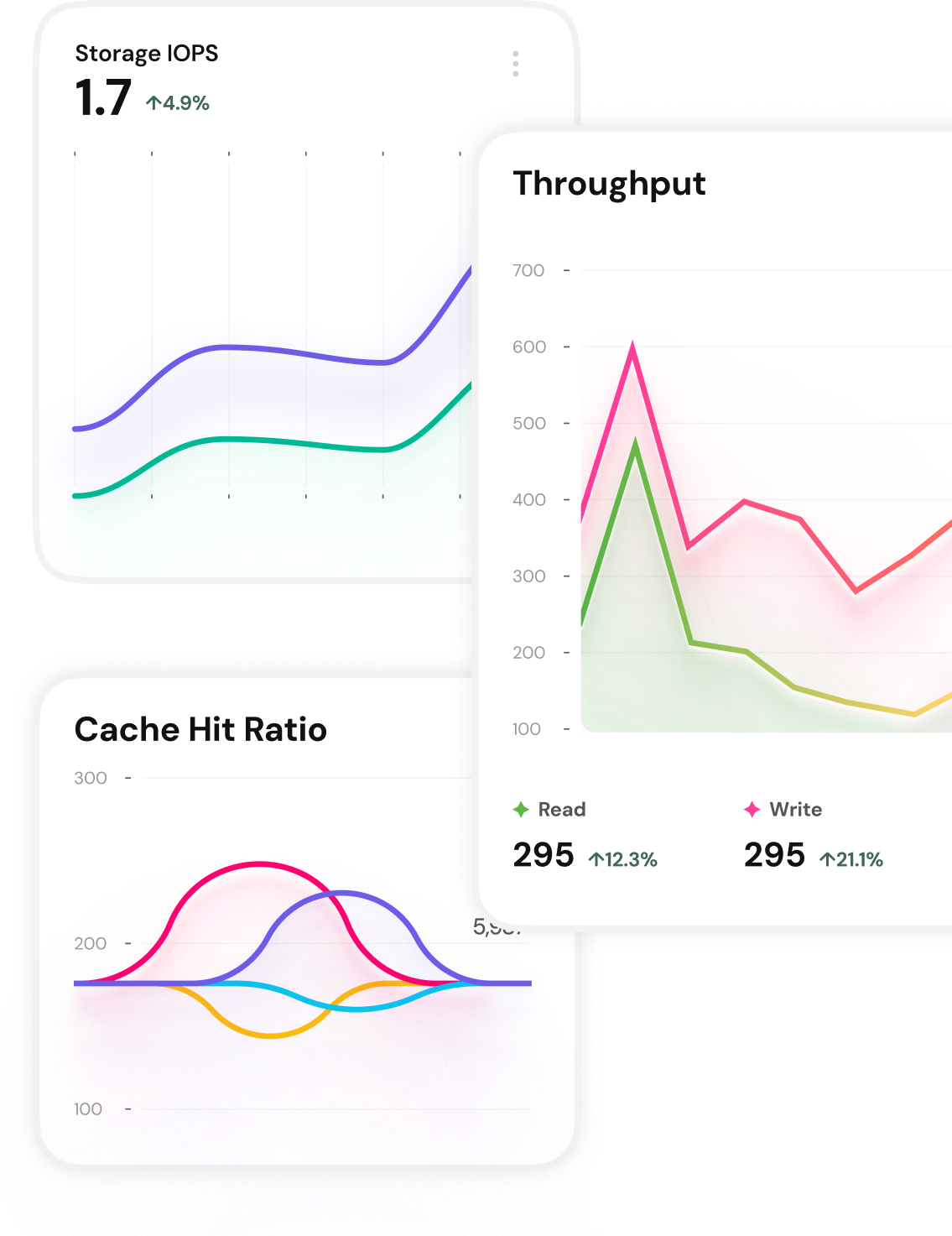
Real-time performance insights

IOPs, latency, connections, replication lag, 50+ live metrics. Identify bottlenecks early and improve database cost optimisation through better performance decisions.

why choose us

Database management for teams
who'd rather be building.

Everything you need to run production-grade databases across cloud providers, from deployment to monitoring, in one unified platform with built-in multi-database support.

Deploy to cloud of your choice

Provision a managed cloud database directly in your AWS, GCP or Azure account starting at $3/month while maintaining full infrastructure control.

Client Logo 1

Built For Reliability

High availability, automated backups, replication, monitoring, and failover are built in. Achieve enterprise-grade resilience without complex manual configuration.

Client Logo 1

Operate With Ease

Track performance, manage scaling, and configure alerts from a central dashboard, eliminating fragmented tools and reducing operational overhead.

For as low as $3/month

our services

Complete Operational Visibility
Across Your Organisation

From performance and backups to alerts and activity tracking, manage every critical database operation across cloud providers from one unified multi-cloud database management platform.

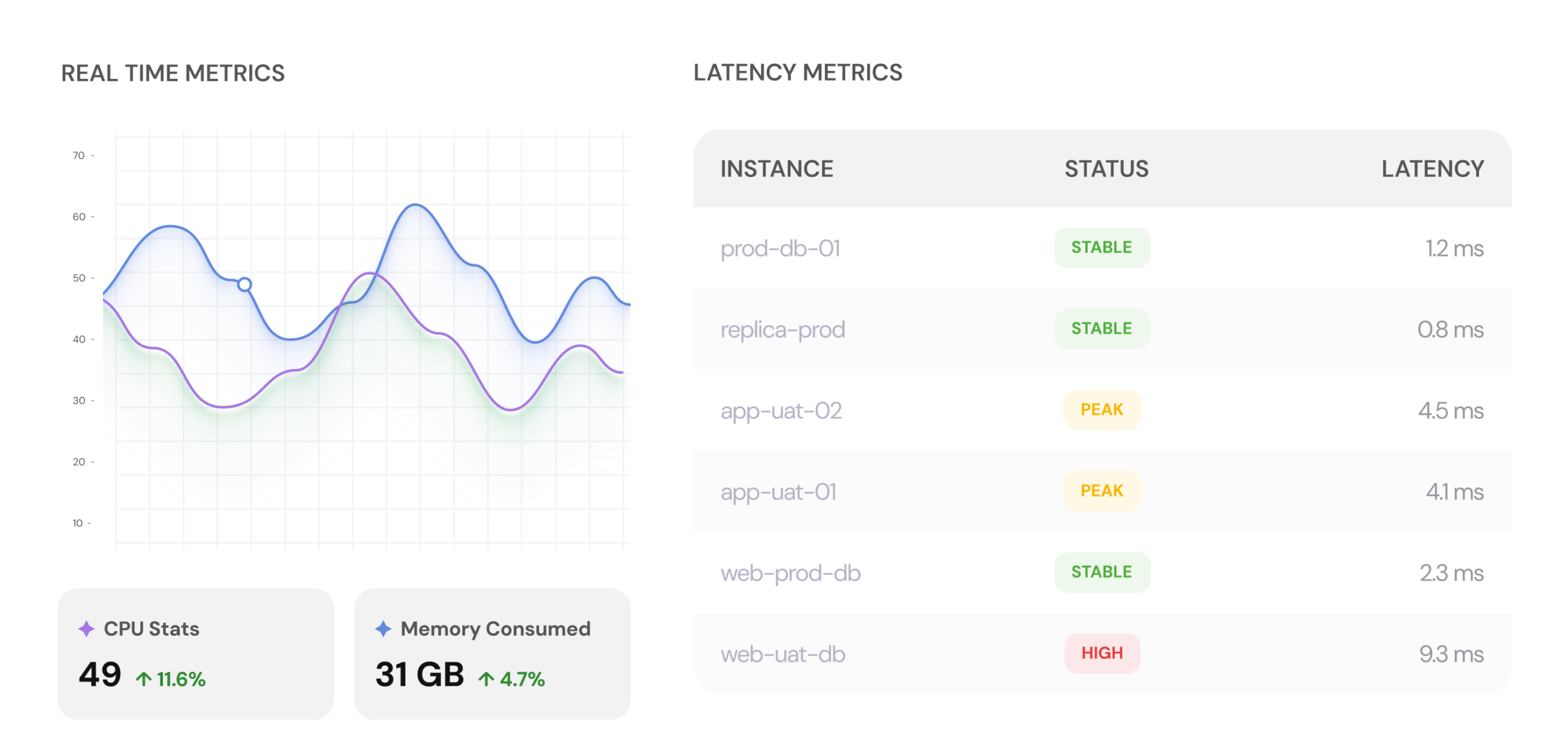
Live Performance Monitoring

Track CPU, memory, disk I/O, latency, and throughput in real time to
understand how your databases perform under load

SelfHost real-time monitoring dashboard with CPU and memory trend charts showing 49% CPU usage, 31GB memory consumed, alongside latency metrics table for 6 database instances with stable, peak, and high status indicators

System Health
Overview

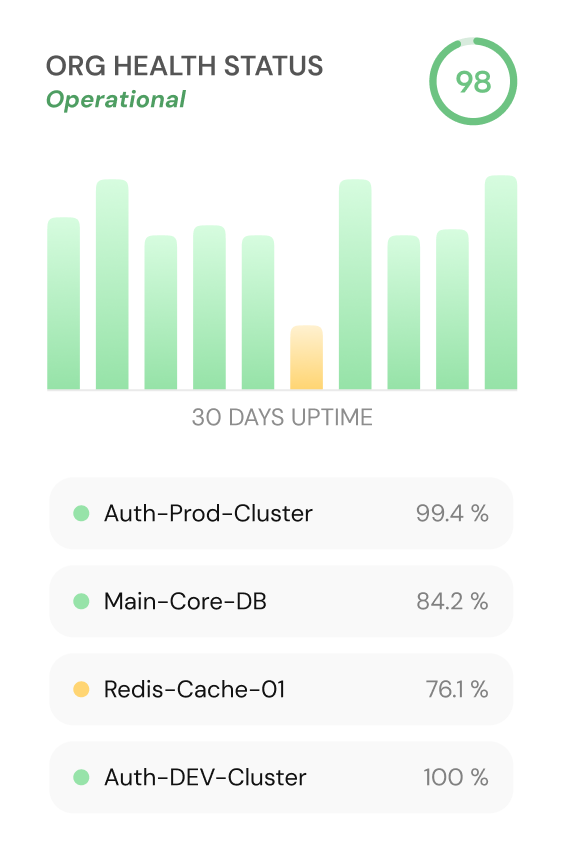
Instant visibility into overall database and infrastructure health so you can catch issues before they impact applications.

SelfHost organization health status dashboard showing 98 overall health score with 30-day uptime bar chart and individual instance availability: Auth-Prod-Cluster (99.4%), Main-Core-DB (84.2%), Redis-Cache-01 (76.1%), Auth-DEV-Cluster (100%)

Backup & Recovery Status

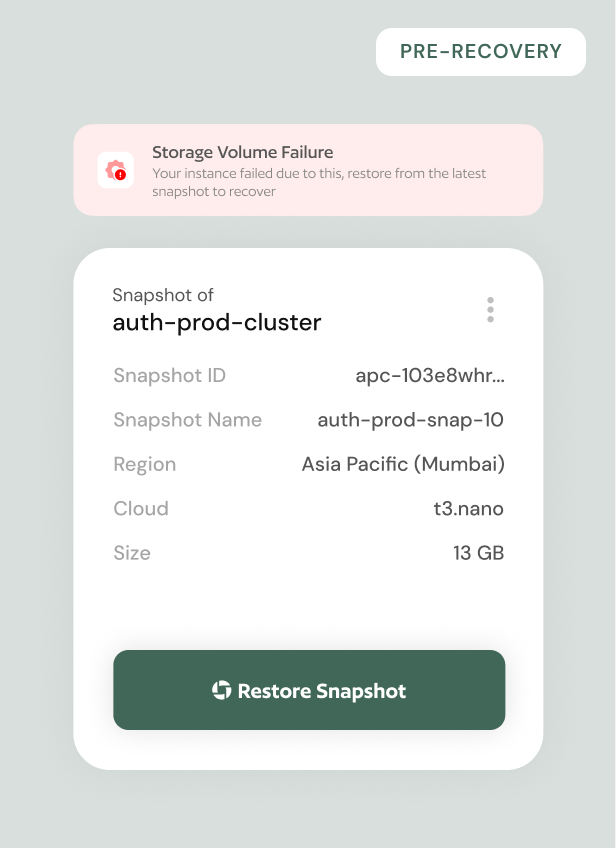
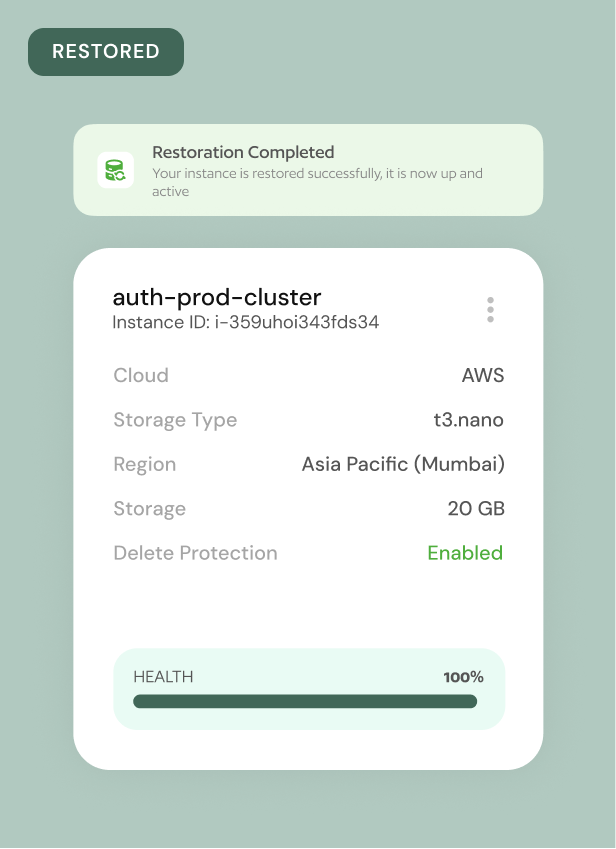
See backup coverage, snapshot history, and recovery readiness at a glance so your data is always protected.

Before Image After Image

Storage & Capacity Insights

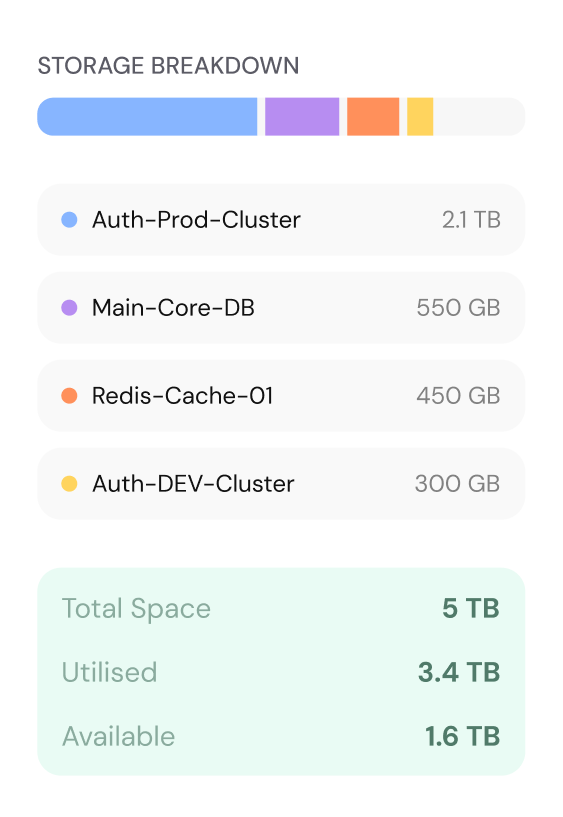
Monitor storage consumption and growth trends to plan scaling without over-provisioning.

SelfHost storage breakdown chart showing 4 database instances consuming 5TB total storage - Auth-Prod-Cluster (2.1TB), Main-Core-DB (550GB), Redis-Cache-01 (450GB), Auth-DEV-Cluster (300GB) - with 3.4TB utilized and 1.6TB available

Instance & Deployment Visibility

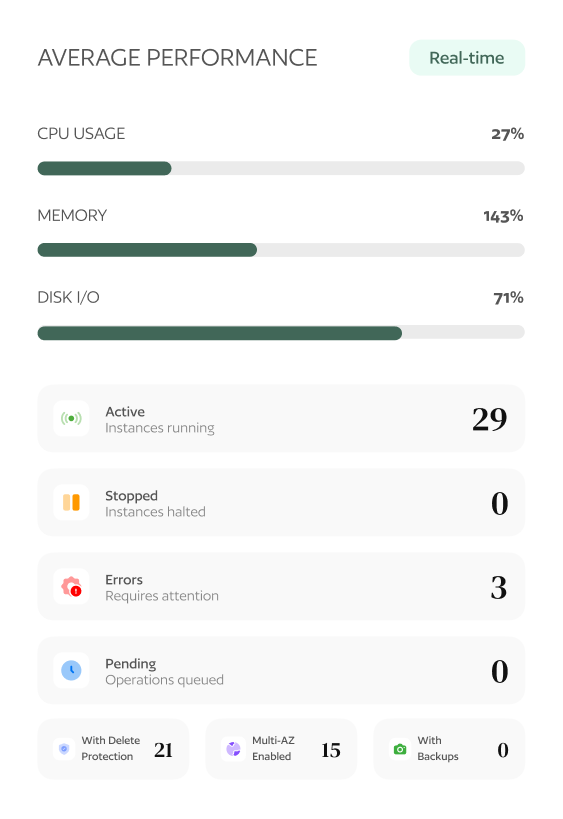
Know which instances are running, pending, or stopped across regions and cloud providers.

SelfHost instance overview dashboard showing real-time CPU (27%), Memory (143%), Disk I/O (71%), with 29 active instances, 3 errors, and protection status indicators

Intelligent Alerts & Incident Detection

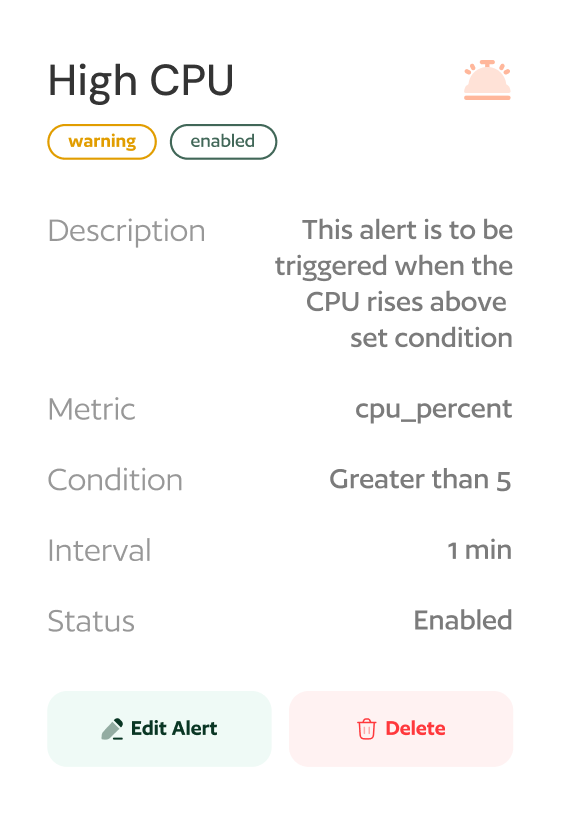
Know about issues before users do. Proactive monitoring and smart alerts help detect anomalies, performance bottlenecks, and risks before they impact applications.

SelfHost alert rule configuration showing High CPU warning alert triggered when cpu_percent exceeds 5, checking every 1 minute, with edit and delete options

Multi-Cloud Resource Distribution

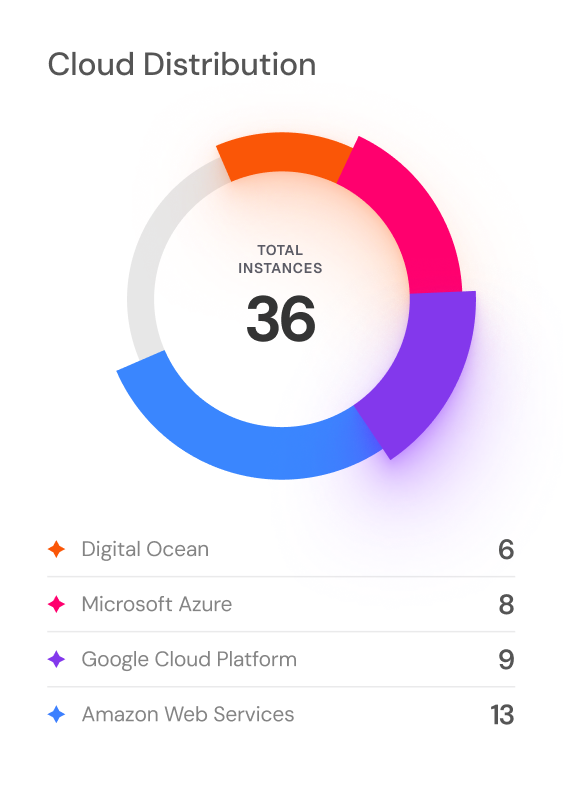
Understand how your databases are distributed across cloud providers, instance types, and regions in one unified view to enable smarter database cost optimisation and infrastructure planning.

SelfHost cloud distribution donut chart showing 36 total instances across 4 providers: AWS (13), Google Cloud (9), Azure (8), Digital Ocean (6)

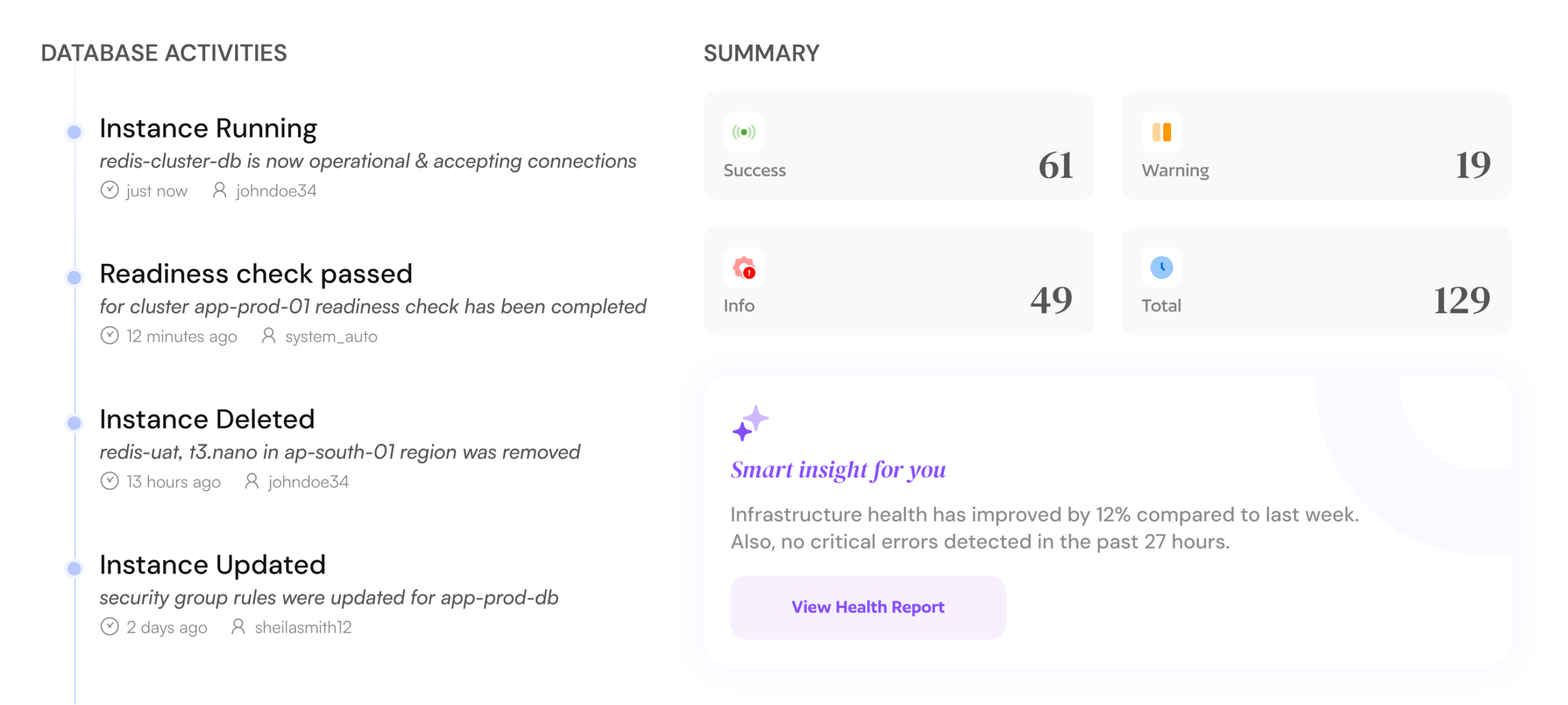
Operational Activity Log

Track database events like provisioning, scaling, backups, configuration changes, and user actions from a centralised activity timeline.

Powerful databases. Lighter invoices

compare

Your Database Operations, Simplified

Most teams stitch together multiple tools to run databases reliably. SelfHost.dev
brings everything together in one unified platform.

Without SelfHost.Dev

Multiple tools. Fragmented visibility. Operational overhead.

  • Cloud console for infrastructure
  • Separate backup scripts
  • Manual failover planning
  • Have to use provider's cloud
  • Separate monitoring & alerting systems
  • Prices rise exponentially as you scale

With SelfHost.Dev

One platform. Centralised visibility.

  • Database provisioning
  • Automated Backups
  • Multi-AZ Reliability
  • No Vendor lock-in
  • Performance monitoring & intelligent alerts
  • Up to 60% lower database hosting cost
case studies

Feel the difference

3 Powerful Solutions for Database Hosting Without DevOps

3 Powerful Solutions for Database Hosting Without DevOps

Growing startup can simplify PostgreSQL management without hiring a DevOps team.

SaaS Startup – Reduce AWS RDS Costs – SelfHost

SaaS Startup – Reduce AWS RDS Costs – SelfHost

Bootstrapped SaaS can reduce database costs with scalable, cost-efficient PostgreSQL hosting.
Why Secure PostgreSQL Hosting for SaaS Became a Critical Decision for a Solo Founder

Why Secure PostgreSQL Hosting for SaaS Became a Critical Decision for a Solo Founder

Affordable self-hosted PostgreSQL for production-ready startup launches.

testimonials

User stories: find out why so many
people love us!

I've spent years writing Terraform scripts and debugging CloudFormation templates just to get databases running properly. SelfHost basically replaced two weeks of implementation work with a 10-minute setup.

The Multi-AZ configuration that used to take me days of testing just... works out of the box.

Atik Sharma

SelfHost is the first database tool where I didn't need to bug our infrastructure team every other day. Spun up a production database for our ML pipeline in literally 3 minutes. The real-time metrics are actually useful, I can see when my batch jobs are hammering the database and adjust accordingly.

Madhav Dhadwal

From a product perspective, SelfHost solved a bottleneck I didn't realise we had. Our engineering team used to spend 15-20% of sprint capacity on database operations - scaling, backup verification, incident response. That's now close to zero.

If SelfHost disappeared tomorrow (no offense), our databases would still be there. That's rare and it matters for long-term planning.

Eric Brian

FAQs

All the essential information you
need to understand.

A managed self-hosted database is a database that runs inside your own cloud account while operational tasks are automated by a management platform. With SelfHost.dev, provisioning, backups, monitoring, failover, and maintenance are handled automatically. Your infrastructure remains in your control, but the operational complexity is removed. This model delivers a cost-efficient managed database experience while preserving infrastructure ownership and flexibility.

SelfHost.dev differs from Amazon RDS and Google Cloud SQL by deploying databases inside your own cloud account instead of the provider’s infrastructure. Traditional managed databases operate within vendor-controlled environments. SelfHost.dev acts as an RDS alternative, using a Bring Your Own Cloud (BYOC) model that gives you control over networking, security, and infrastructure. You retain ownership while benefiting from automation and database cost optimisation.

Bring Your Own Cloud (BYOC) means your database infrastructure runs inside your personal AWS, GCP, or Azure account. Unlike vendor-managed environments, you maintain control over infrastructure boundaries and cloud resources. SelfHost.dev provides automation, monitoring, and reliability on top of your existing cloud setup. This BYOC database platform model supports multi-cloud database deployment while helping avoid vendor lock-in.

Yes, SelfHost.dev allows you to to create database instances on their account of the cloud provider chosen by you, while you can also opt in to link your cloud account

Yes. SelfHost.dev helps reduce database costs by removing the premium markup of traditional managed database platforms. You pay directly for raw cloud infrastructure while still receiving automation, backups, and monitoring.

No. SelfHost.dev is designed to simplify database deployment across cloud providers. Provisioning, monitoring, backups, scaling, and maintenance are automated through a unified interface. Teams can run production-ready databases without managing complex infrastructure scripts or multi-tool workflows. This reduces operational overhead while maintaining flexibility.

SelfHost.dev ensures high availability through Multi-AZ deployments and automated failover. If a primary instance becomes unavailable, traffic automatically shifts to a healthy replica. This reduces downtime and supports production-grade reliability across cloud providers. High availability is built into the platform as part of its multi-cloud database management architecture.

SelfHost.dev provides centralised monitoring for IOPS, latency, throughput, connection usage, replication lag, and overall resource utilisation. These performance insights are available in real time through a unified dashboard. This visibility supports proactive troubleshooting and database cost optimisation by identifying inefficiencies early.

Yes. SelfHost.dev is built as a production-ready database platform. It includes automated backups, monitoring, high availability, and operational safeguards required for mission-critical applications. Databases run in your own cloud account while operational management is automated. This makes it suitable for scalable and production-grade environments.

Yes. SelfHost.dev supports multi-cloud database management. Teams can deploy and monitor databases across AWS, GCP, and Azure from a single dashboard. This simplifies database deployment across cloud providers and improves visibility while avoiding vendor lock-in.

Teams experiencing rising database costs, limited visibility, or vendor lock-in should consider SelfHost.dev. It is particularly suitable for startups and SaaS platforms looking for a cheaper than Amazon RDS alternative that supports multi-cloud database deployment and database cost optimisation without hiring a large operations team.